Azul board game review: is it worth buying?

Azul is a tile-drafting and pattern-completion strategy game for 2 to 4 players. Players select colored tiles from factory circles to fill rows on a personal board, scoring points for completing rows and losing points for leftover tiles, all within a 45 to 60 minute play time.

By Pickspry EditorialUpdated 4 picks


The short answer

Azul base game at $35 is worth buying for groups of 2 to 4 players aged 8 and up who want a visually satisfying tile-drafting game that is quick to explain, plays in 45 to 60 minutes and provides genuine strategic depth from the interplay between what you take and what you deny your opponents.

Product buttons open Amazon search results. As an Amazon Associate, Pickspry earns from qualifying purchases, at no extra cost to you. Learn more

Quick picks

How we chose

Board games are evaluated by player count, recommended age, average play time, complexity rating, core mechanics and price. Game details from Plan B Games product specifications. We did not test these products.

The picks, in detail

4 picks reviewed
01
Best for most households
Plan B Games Azul Base Game

Azul Base Game

Brand: Plan B Games

Best for

Groups of 2 to 4 players who want an abstract strategy game with quality components, elegant rules that teach in under 10 minutes and satisfying decisions from how tile selection forces both building your own board and disrupting opponents.

Skip if

A thematic game with a narrative or world-building element is preferred. Azul is a pure abstract strategy game with no theme beyond decorating a Portuguese palace wall. Players who prefer games with stories, characters or setting context will find Azul's abstraction less engaging despite the quality of the mechanics.

Azul uses factory circles (number equal to player count multiplied by 2 plus 1, maximum 9) loaded with 4 tiles each. On their turn, a player takes all tiles of one color from one factory circle, placing unchosen tiles in the center pool. Players place tiles in rows on their personal board according to strict row-filling rules.

At end of round, completed rows score points and tiles slide into the mosaic wall. Incomplete rows return to the floor, deducting 1 to 3 penalty points per tile. The game ends when any player completes a full horizontal row in their mosaic wall.

At $35, Azul is the most awarded abstract strategy game of the last decade and won the Spiel des Jahres award in 2018.

Specifications

Specifications for Azul Base Game
Players2 to 4
Age8 and up
Play time45 to 60 minutes
Price$35

Specs from Azul, tile drafting board game Amazon search

02
Best Azul for more strategic freedom
Plan B Games Azul Summer Pavilion

Azul Summer Pavilion

Brand: Plan B Games

Best for

Players who have completed multiple games of the base Azul and want more flexible tile placement options, where Summer Pavilion replaces the fixed mosaic wall grid with a star pattern that allows more choices in how tiles are placed each round.

Skip if

New Azul players are involved. Summer Pavilion introduces wilds (one color changes each round) and more complex scoring rules that are harder to grasp on first play. The base game is the recommended starting point before Summer Pavilion.

Azul Summer Pavilion replaces the fixed 5x5 mosaic wall of the original with a star-shaped personal board where tiles of each color must fill specific star points but with more placement flexibility per round. One color each round is designated as the wild color, allowing it to substitute for any tile type.

The wilds add a strategic dimension absent in the base game, as the changing wild color each round means different tiles become more or less valuable. Scoring bonuses for completing full color sets provide longer-range planning objectives.

At $40, Summer Pavilion is $5 more than the base game and provides a meaningfully different strategic experience rather than a simple upgrade.

Specifications

Specifications for Azul Summer Pavilion
Players2 to 4
Age8 and up
Key differenceFlexible star pattern vs fixed mosaic grid
Price$40

Specs from Azul Summer Pavilion, board game Amazon search

03
Best Azul for solo or 2 players
Plan B Games Azul Crystal Mosaic

Azul Crystal Mosaic

Brand: Plan B Games

Best for

Existing Azul owners who want upgraded player board overlays with a transparent plastic window that makes tile placement more tactile and clearly visible, plus a 5th player board for solo or multi-player use.

Skip if

You do not own the Azul base game. Azul Crystal Mosaic is an upgrade kit that works with the base Azul game. The transparent overlays replace the standard cardboard player boards and do not add game mechanics. If new to Azul, buy the base game first.

Azul Crystal Mosaic provides 5 transparent plastic overlay boards that sit over the standard Azul player boards, creating a sunken grid that tiles slot into more securely. The transparency allows players to see the mosaic wall scoring bonuses through the overlay.

The 5th overlay board allows Azul to be played with 5 players, adding 2 more factory circles to the setup. The overlays are designed for the original Azul base game specifically.

At $25, Azul Crystal Mosaic is a tactile upgrade rather than a content expansion for committed Azul players who want improved component quality.

Specifications

Specifications for Azul Crystal Mosaic
ContentsTransparent overlay boards for 4 players plus 1 extra
RequiresAzul base game
AddsTactile overlay boards, 5th player support
Price$25

Specs from Azul Crystal Mosaic, expansion overlay Amazon search

04
Best Azul with stained glass theme
Plan B Games Azul Stained Glass of Sintra

Azul Stained Glass of Sintra

Brand: Plan B Games

Best for

Players who have completed the base Azul game and want a version with a panel-based board that is dealt randomly each game, creating different scoring opportunities each session and a faster pace through more aggressive panel completion.

Skip if

New Azul players are involved. Stained Glass of Sintra has an additional scoring mechanic (completing panels to score bonuses) and a randomly dealt personal board that is harder to evaluate on first play. The base game teaches the fundamentals before this variant's additional complexity.

Azul Stained Glass of Sintra replaces the fixed player boards with randomly dealt window panels that each player builds up during the game. Each panel holds a specific number of tiles of one color, and completing a panel scores a bonus visible on the panel card.

The random panel distribution creates different board state each game. Players discard their least complete panel at the end of each round rather than taking floor penalties, which changes the risk calculation compared to the base game.

At $40, Stained Glass of Sintra is a lateral variant rather than a direct upgrade, suited for players who want a different Azul experience alongside the original.

Specifications

Specifications for Azul Stained Glass of Sintra
Players2 to 4
Age8 and up
Key differenceRandom panel boards vs fixed mosaic wall
Price$40

Specs from Azul Stained Glass of Sintra, board game Amazon search

Azul product comparison

Product Players Age Play time Price
Azul Base Game 2 to 4 8+ 45-60 min $35
Summer Pavilion 2 to 4 8+ 45-60 min $40
Crystal Mosaic (expansion) 2 to 5 8+ 45-60 min $25
Stained Glass of Sintra 2 to 4 8+ 45-60 min $40

Compare the picks

Side by side comparison of every pick
Specification
Plan B Games Azul Base Game
Azul Base Game
Plan B Games Azul Summer Pavilion
Azul Summer Pavilion
Plan B Games Azul Crystal Mosaic
Azul Crystal Mosaic
Plan B Games Azul Stained Glass of Sintra
Azul Stained Glass of Sintra
Our verdictBest for most householdsBest Azul for more strategic freedomBest Azul for solo or 2 playersBest Azul with stained glass theme
Players2 to 42 to 4Not listed2 to 4
Age8 and up8 and upNot listed8 and up
Play time45 to 60 minutesNot listedNot listedNot listed
Price$35$40$25$40
Key differenceNot listedFlexible star pattern vs fixed mosaic gridNot listedRandom panel boards vs fixed mosaic wall
ContentsNot listedNot listedTransparent overlay boards for 4 players plus 1 extraNot listed
RequiresNot listedNot listedAzul base gameNot listed
AddsNot listedNot listedTactile overlay boards, 5th player supportNot listed
BuyCheck priceCheck priceCheck priceCheck price

Questions people ask

How do you score points in Azul?

Points in Azul are scored at the end of each round when tiles from completed rows slide into the mosaic wall. A tile scores 1 point for its own placement, plus 1 additional point for each horizontally adjacent tile already in the wall, plus 1 additional point for each vertically adjacent tile already in the wall. A tile placed in an isolated position with no neighbors scores 1 point. A tile placed to complete a full row or column of 5 tiles scores 5 points for the row/column plus adjacency points. Additional bonus scoring applies at game end for complete horizontal rows (2 points), complete vertical columns (7 points) and complete sets of 5 same-color tiles (10 points).

How long does Azul take to learn?

Azul can be explained in under 10 minutes for most players. The rules are simple: take all tiles of one color from one source, place them in a row on your board, score and slide at round end. The depth comes not from complex rules but from the interaction between what tiles you choose, what you deny opponents by taking them and how to balance filling rows quickly against positioning tiles for maximum scoring adjacency. New players typically understand the rules completely by the end of their first game. The second game plays noticeably faster and with more strategic intentionality once the scoring implications are visible.

Is Azul worth buying if you already own Catan or Ticket to Ride?

Azul fills a different role in a game collection than Catan or Ticket to Ride. Catan and Ticket to Ride are strategy games with trading, route-building and competitive elements over 60 to 90 minutes. Azul is an abstract strategy game with elegant simplicity, quality components, a 45-minute play time and a visual satisfaction in the tile placement that the other games do not provide. Azul plays better at 2 players than Catan. It teaches faster than either. If a game collection already has Catan and Ticket to Ride, Azul adds a short-play abstract option that plays differently from both.

  • Buying guide

    Catan board game review: is it worth buying?

    Catan (formerly Settlers of Catan) is a resource collection and trading strategy game for 3 to 4 players. Hex tile board, trading mechanics, longest road and largest army scoring, and 60 to 90 minute play time make it the most widely sold modern board game in the world.

    4 picks · 5 sourcesUpdated September 28, 2026

  • Buying guide

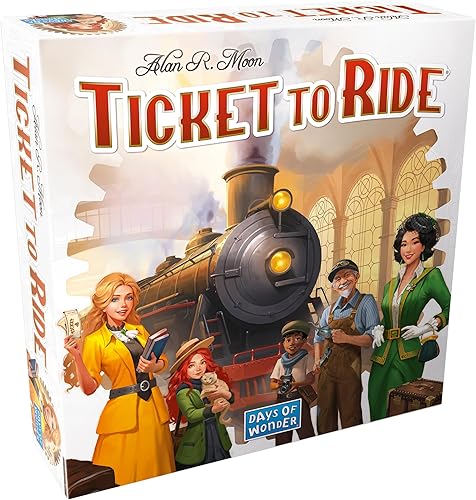
    Ticket to Ride board game review: is it worth buying?

    Ticket to Ride is a route-building strategy game where players collect train cards to claim railway routes across a map. Card collection, strategic route blocking and destination ticket scoring make it one of the most accessible strategy games for mixed-experience groups.

    4 picks · 5 sourcesUpdated September 28, 2026

  • Buying guide

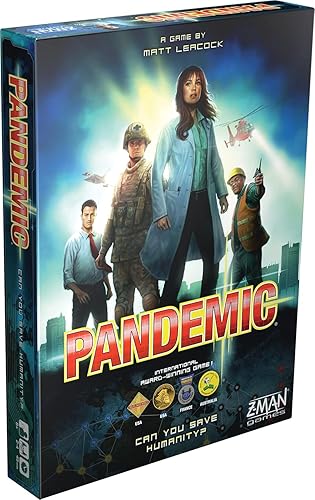
    Pandemic board game review: is it worth buying?

    Pandemic is a cooperative board game where 2 to 4 players work together to cure four diseases before they spread across the global map. Role cards, infection rate escalation, outbreak chains and the shared loss condition create a collaborative tension absent in competitive games.

    4 picks · 5 sourcesUpdated September 28, 2026

  • Buying guide

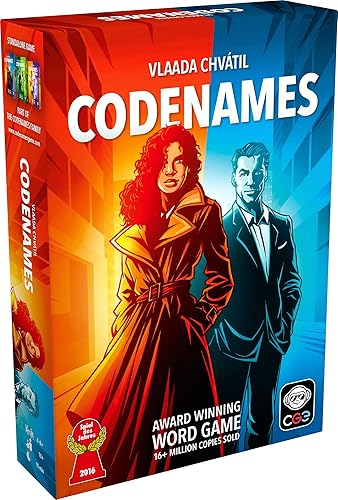
    Codenames board game review: is it worth buying?

    Codenames is a word-association party game for 4 to 8 players split into two teams. Spymasters give one-word clues linking multiple code words on a grid while teammates guess which cards belong to their team without accidentally revealing the assassin word.

    4 picks · 5 sourcesUpdated September 28, 2026