Foam Rollers

High-density, vibrating and textured foam rollers for muscle recovery and mobility work.

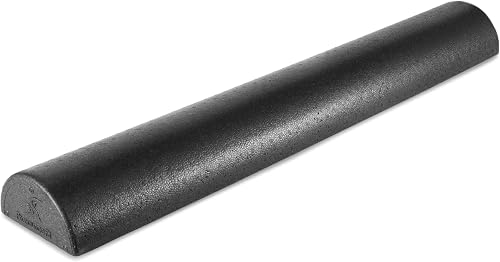
Foam roller density determines the pressure applied to muscles during use. A low-density foam roller (white foam) compresses easily under body weight and provides gentle pressure appropriate for beginners or people with acute muscle soreness. A high-density foam roller (black foam) maintains its shape under body weight and provides deeper pressure for regular myofascial release work. A textured or grid foam roller has surface patterns that target specific trigger points. A vibrating foam roller adds mechanical vibration at multiple frequencies to increase blood flow and reduce recovery time. This section covers foam rollers by density, texture, length and vibration feature.

6 guides in this section

All guides(6)

  • Buying guide

    Best firm foam roller: high density and extra firm picks 2026

    Firm foam rollers are evaluated by core construction (solid vs hollow), foam type (EVA vs PU foam vs polypropylene), density rating (high vs extra firm), whether the surface is smooth or textured, consistency of firmness over years of use, how aggressively the roller targets deep tissue compared to softer rollers and price to determine which firm foam rollers provide the most effective deep tissue pressure for experienced users.

    4 picks · 5 sourcesUpdated September 28, 2026

  • Buying guide

    Best foam roller for back: upper and thoracic picks on Amazon 2026

    Back foam rollers are evaluated by length (36-inch for full back vs 13-inch for targeted), width (3-inch wheel vs 6-inch cylinder), rigidity (must support upper back without collapsing), whether the roller addresses the thoracic spine specifically (curved or grooved spine channel), knob or grid texture for upper trap and lat rolling, and price to identify which foam rollers are safest and most effective for upper and mid-back recovery.

    4 picks · 5 sourcesUpdated September 28, 2026

  • Buying guide

    Best foam roller for beginners: soft and easy picks on Amazon 2026

    Beginner foam rollers are evaluated by density (soft vs medium, not firm or extra firm), surface texture (smooth is more comfortable for beginners vs textured), diameter (standard 6-inch is easiest to control), length (12 to 18 inches is more manageable than 36-inch for a beginner), weight and price to identify which foam rollers are best suited for first-time buyers.

    4 picks · 5 sourcesUpdated September 28, 2026

  • Buying guide

    Best foam roller: muscle recovery picks on Amazon 2026

    Foam rollers are evaluated by density (soft vs medium vs firm vs extra firm), surface texture (smooth vs grid vs knobs), diameter and length (6-inch vs 12-inch vs 36-inch), material (EVA foam vs EPE foam vs hollow-core vs solid-core), vibration option and price to determine which foam rollers are best for general muscle recovery, pre-workout warm-up and post-workout soreness relief.

    4 picks · 5 sourcesUpdated September 28, 2026

  • Buying guide

    Best short foam roller: 12-inch and travel picks on Amazon 2026

    Short foam rollers are evaluated by length (4-inch to 12-inch vs full-length 36-inch), diameter (4-inch massage ball vs 6-inch standard), density, surface texture, portability for gym bag storage, weight and price to identify which short foam rollers are best for targeted muscle group rolling, travel use and small storage spaces.

    4 picks · 5 sourcesUpdated September 28, 2026

  • Buying guide

    Best vibrating foam roller: motor speed picks on Amazon 2026

    Vibrating foam rollers are evaluated by vibration speed count (2 vs 3 vs 5 speeds), motor frequency in Hz (30 Hz to 60 Hz), battery capacity and run time per charge, charging method (USB-C vs proprietary), body surface texture (smooth vs grid), weight, noise level and price to identify which vibrating foam rollers produce the most effective vibration-assisted muscle recovery.

    4 picks · 5 sourcesUpdated September 28, 2026