What can I use kitchen shears for?
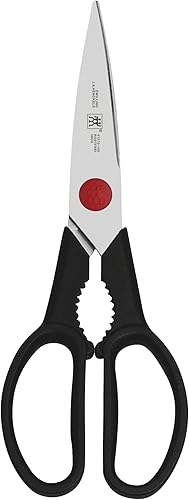
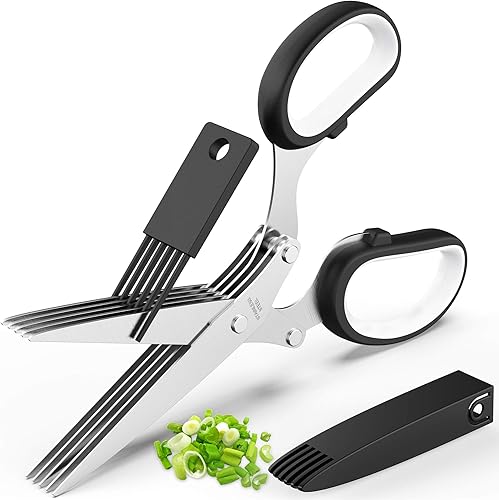
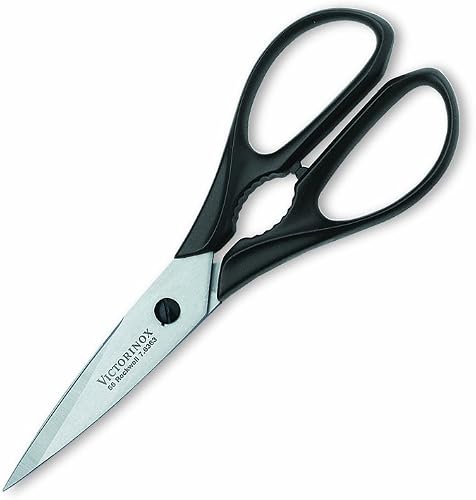
Kitchen shears cut food that is awkward or unsafe to cut with a knife on a cutting board. Common uses: cutting dried pasta directly over a pot (faster and less mess than breaking it by hand), cutting pizza into slices without a pizza wheel, cutting canned whole tomatoes in the can before opening (using the blades inside the can to avoid splatter), trimming fat from chicken pieces, snipping fresh herbs like chives and parsley directly over a dish, cutting bacon strips into lardons, opening packaging and vacuum-sealed bags, and jointing whole chickens. Poultry shears (a heavier subset of kitchen shears with a bone-cutting notch) can cut through chicken joints, lobster shells and crab shells that standard kitchen shears cannot handle. Standard kitchen shears like OXO Good Grips are adequate for most home cooking tasks; a bone notch becomes necessary only for spatchcocking whole chickens or breaking down shell-on crustaceans.
How do I clean kitchen shears?
Kitchen shears with separating blades (where the two halves unscrew or pull apart) clean completely in the dishwasher after separating them. The joint where the two blades cross accumulates food residue and bacteria if the shears are cleaned without separating the blades. For shears with non-separating blades: scrub the blade faces and the crossing joint with hot soapy water and a bottle brush that reaches into the joint area, then dry immediately to prevent rust at the joint. Most kitchen shears from major brands (OXO, Wusthof, Zwilling) are dishwasher-safe when the blades are separated. Japanese kitchen shears (Shun) often recommend hand-washing to preserve the blade edge. After washing, dry the joint area before storing to prevent rust, which starts at the metal-to-metal contact area at the screw joint. If rust spots appear: a paste of baking soda and water applied with a dry cloth removes surface rust without scratching the blade finish.
Are kitchen shears the same as scissors?
Kitchen shears and regular scissors share the same basic mechanism (two blades crossing at a pivot point), but kitchen shears are specifically designed for food cutting tasks. The differences: kitchen shears use stainless steel blades (not standard carbon steel that rusts on contact with food and water), they typically include at least one serrated blade to grip slippery food like chicken skin, most kitchen shears have separating blades for full cleaning access to the joint area, many kitchen shears include a bone-cutting notch between the handle loops and the blade pivot for cracking joints and shells, and kitchen shears are sized for one-handed cutting with ingredients rather than two-handed craft-cutting. Standard household scissors can cut food in a pinch, but they rust faster, cannot be fully cleaned at the joint and are not designed for the forces involved in cutting through chicken joints or lobster shells. A dedicated pair of kitchen shears pays for itself quickly in easier prep and safer cutting.