What gauge stainless steel is best for mixing bowls?
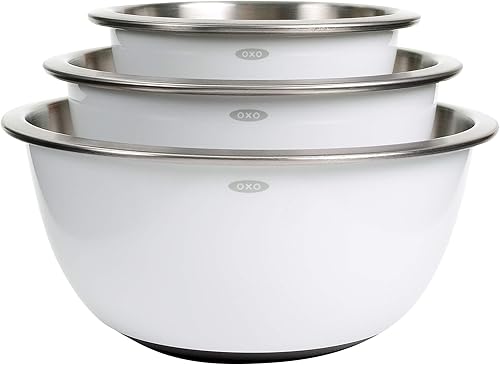
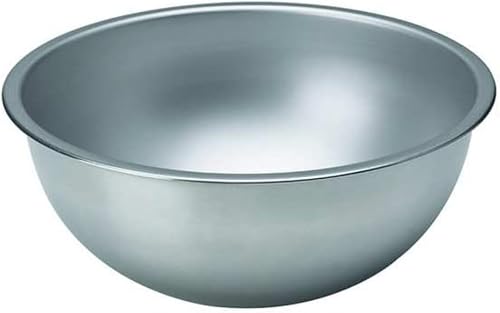
Stainless steel mixing bowls for home kitchens typically use 18-gauge to 20-gauge steel sheet. The gauge numbering is counterintuitive: a lower gauge number means thicker steel (18 gauge is thicker than 20 gauge). Home-grade mixing bowls in the $15 to $30 range typically use 20-gauge stainless, which is adequate for all home baking and cooking tasks and durable enough to last 10 to 20 years with normal use. Commercial-grade mixing bowls (Vollrath, Update International) use 18-gauge or heavier stainless to withstand the repeated impacts and stacking forces of a commercial kitchen. For home use, the gauge difference is noticeable only if the bowl is dropped frequently or stacked under heavy items: 20-gauge home bowls dent more easily from drops than 18-gauge commercial bowls. The non-slip base, pour spout and lid features matter more for home kitchen usability than the gauge difference between home-grade options.
What can I use stainless mixing bowls for besides baking?
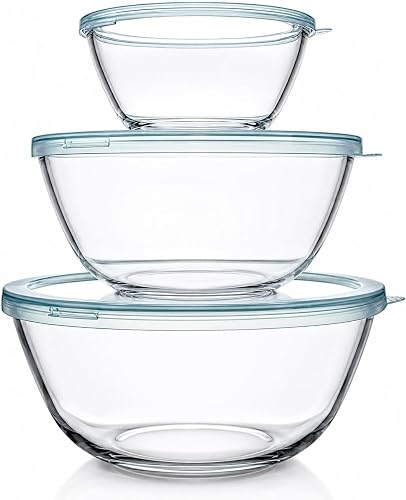
Stainless steel mixing bowls have uses throughout the kitchen beyond mixing dough and batter. Food prep: as a bowl for mise en place (prepped and measured ingredients before cooking), as a catchall for vegetable scraps during chopping, and as a vessel for soaking dried legumes or grains. Temperature work: stainless heats and cools faster than glass, making it ideal for a double boiler (a stainless bowl set over a pot of simmering water melts chocolate or tempers egg-based sauces like hollandaise without direct heat). Chilling: set the stainless bowl in a larger bowl of ice water to chill whipped cream, custard or hot soups that need to cool quickly. Fermentation: use a large stainless bowl covered with a plate for bulk fermentation of bread dough or soaking dried beans overnight. Storage: OXO mixing bowls with flat lids convert directly to food storage, eliminating the need to transfer food to a separate storage container.
How do I prevent mixing bowls from sliding?
Mixing bowls without non-slip bases slide across countertops during vigorous whisking and folding. Several methods prevent sliding: a damp kitchen towel placed under the bowl creates friction between the bowl and counter surface that stops most sliding. A silicone mat under the bowl provides more permanent non-slip resistance than a damp towel and does not require re-wetting. For bowls without built-in non-slip bases, a non-slip shelf liner cut to bowl-bottom size works as a permanent under-bowl mat. For occasional tasks, looping the bowl handle or rim through a pot holder or dish towel and holding both against the counter prevents sliding without needing a mat. If mixing bowl sliding is frequent enough to be disruptive, the most effective permanent solution is to replace the smooth-bottomed bowls with non-slip-base models (OXO, KitchenAid). The non-slip rubber base is a one-time purchase that eliminates the need for workarounds on every mixing session.