Best guitar capo for acoustic and electric guitar: Amazon picks

Guitar capo spring tension, mounting style, pad material, fretboard radius compatibility and whether the capo works for acoustic, classical or electric guitar determine which capo suits different playing styles.

By Pickspry EditorialUpdated 4 picks


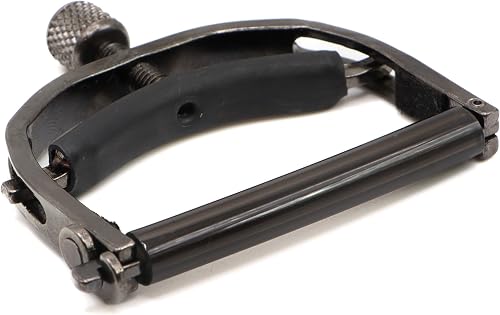
The short answer

Kyser Quick-Change Capo at $20 is the best guitar capo for most players: the spring mechanism allows one-hand capo placement and removal during performance without stopping to loosen a screw or adjust tension, and the curved aluminum capo bar spans all six strings on acoustic and electric guitar necks without requiring adjustment for each neck radius.

Product buttons open Amazon search results. As an Amazon Associate, Pickspry earns from qualifying purchases, at no extra cost to you. Learn more

Quick picks

How we chose

Guitar capos are evaluated by mounting mechanism, spring tension, pad material, fretboard radius compatibility, tuning impact and price. Specs from manufacturer product pages. We did not test these products.

The picks, in detail

4 picks reviewed
01
Best guitar capo for most players
Kyser Kyser Quick-Change 6-String Guitar Capo

Kyser Quick-Change 6-String Guitar Capo

Brand: Kyser

Best for

Guitarists who change keys frequently during a performance or practice session and need to reposition the capo quickly with one hand without stopping to adjust a tension mechanism, where Kyser Quick-Change uses a spring-loaded trigger mechanism that can be placed or removed with a single hand squeeze.

Skip if

Precise tension control is the priority. Kyser Quick-Change uses a fixed spring tension that may apply more pressure than necessary on some guitar necks, potentially pushing strings slightly sharp when clamped. For players who find Kyser causes intonation issues on their specific guitar, an adjustable tension capo like Shubb or G7th provides per-guitar tension calibration.

Kyser Quick-Change uses a hinged aluminum body with a rubber pad bar that presses across all six strings when the spring-loaded handle is squeezed and released. The capo attaches to the guitar neck from above the strings in a single-handed motion. When not in use, the capo can be clamped to the guitar headstock for quick access during a set.

The curved aluminum bar is designed for standard acoustic and electric guitar neck radii (7.25 to 16 inches). The rubber pads are replaceable as they wear.

At $20, Kyser Quick-Change is the most affordable full-featured capo in this guide and the standard recommendation for most playing situations.

Specifications

Specifications for Kyser Quick-Change 6-String Guitar Capo
MechanismSpring trigger (single hand operation)
Compatible strings6-string guitar
MaterialAluminum with rubber pad
ColorsMultiple
Price$20

Specs from Kyser Quick-Change guitar capo, 6 string acoustic electric Amazon search

02
Best capo for precise intonation
G7th G7th Performance 3 ART Guitar Capo

G7th Performance 3 ART Guitar Capo

Brand: G7th

Best for

Professional and advanced guitarists who want the most intonation-accurate capo available, where G7th Performance 3 uses Adaptive Radius Technology (ART) that automatically conforms to the guitar's fretboard radius and the IntelliGrip pad that requires lower clamping force than spring capos to achieve the same note clarity.

Skip if

Quick single-hand operation is the priority. G7th Performance 3 uses a squeeze-and-roll mechanism that is faster than a screw capo but slower than Kyser's instant-release spring. For players who need to move the capo very quickly between songs in a live setting, Kyser Quick-Change's one-motion operation is faster.

G7th Performance 3 uses a spring-loaded rolling mechanism where the capo tightens as it is rolled toward the neck and releases as it is squeezed open. The ART pad flexes to match the exact curvature of the guitar's fretboard, ensuring even pressure across all six strings regardless of the specific neck radius.

The IntelliGrip pad material achieves a secure fret contact with lower clamping force than rigid pads, reducing the lateral string pressure that pulls notes sharp. The performance 3 works for acoustic and electric guitar.

At $60, G7th Performance 3 is the premium capo in this guide, appropriate for players who have identified intonation problems with lower-cost spring capos on their specific guitar.

Specifications

Specifications for G7th Performance 3 ART Guitar Capo
MechanismSqueeze and roll (no screw)
TensionAdjustable via pressure
Radius adaptationART (Adaptive Radius Technology)
CompatibleSteel string acoustic and electric
Price$60

Specs from G7th Performance 3 ART guitar capo, adjustable tension professional capo Amazon search

03
Best screw-tension capo
Shubb Shubb Deluxe C1 Guitar Capo

Shubb Deluxe C1 Guitar Capo

Brand: Shubb

Best for

Guitarists who prefer a screw-tension capo that can be set to the precise tension needed for their specific guitar and left at that setting for consistent results, where Shubb Deluxe uses a thumb-screw mechanism that tightens to a specific tension and remains at that tension whenever the capo is placed on the neck without re-adjusting.

Skip if

Frequent mid-song key changes are needed. Shubb requires two hands to open, reposition and re-tighten the screw, making it slower to change position than spring or squeeze-roll capos. For fast key changes during performance, Kyser Quick-Change is the appropriate choice.

Shubb Deluxe C1 uses a roller screw mechanism that sets the tension by tightening or loosening a screw against a roller. Once set to the correct tension for a specific guitar, the capo opens and closes on that same tension setting for every subsequent use without re-adjustment.

The soft rubber pad is designed to apply even pressure without scratching the guitar's fretboard finish. The stainless steel body is resistant to corrosion and wear. Shubb capos are made in California, USA.

At $30, Shubb Deluxe C1 is between the budget Kyser and the premium G7th in both price and feature set.

Specifications

Specifications for Shubb Deluxe C1 Guitar Capo
MechanismRoller screw (roller lock)
TensionSet once via screw adjustment
MaterialStainless steel with soft rubber pad
Compatible6-string acoustic and electric
Price$30

Specs from Shubb Deluxe C1 guitar capo, screw tension acoustic electric capo Amazon search

04
Best capo for partial capo technique
Paige Paige P-6E Acoustic Guitar Capo

Paige P-6E Acoustic Guitar Capo

Brand: Paige

Best for

Advanced guitarists who use partial capo techniques (capoing only some strings) for open-tuning-like chord voicings without changing string tuning, where Paige P-6E uses an adjustable tension arm that can be customized to cover specific strings with different pressure for partial capo applications.

Skip if

Standard full-string capo is the only requirement. Paige P-6E is designed for advanced partial capo applications that most beginners do not use. For standard 6-string capoing, Kyser Quick-Change provides faster operation at a lower price without the complexity of Paige's adjustable system.

Paige P-6E uses a steel tension arm that clamps to the guitar neck. The arm position can be adjusted to cover 2 to 6 strings rather than the full 6. This allows capoing only the top 4 strings (leaving strings 5 and 6 open) or other partial configurations that create drone strings above or below the capoed chord shape.

Partial capo techniques are associated with folk, Celtic and open-tuning styles where the drone effect of uncapoed strings against capoed chord shapes creates specific harmonic textures. The Paige is the standard tool for exploring partial capo technique.

At $40, Paige P-6E is appropriate for guitarists who have specifically decided to explore partial capo techniques rather than as a first capo purchase.

Specifications

Specifications for Paige P-6E Acoustic Guitar Capo
MechanismAdjustable tension arm
String coverageAdjustable (full or partial)
CompatibleAcoustic guitar 6-string
MaterialSteel with soft arm pad
Price$40

Specs from Paige P-6E guitar capo, partial capo acoustic Amazon search

Guitar capo comparison

Model Mechanism Tension Compatible Price
Kyser Quick-Change Spring trigger Fixed 6-string $20
Shubb Deluxe C1 Roller screw Adjustable 6-string $30
Paige P-6E Adjustable arm Adjustable Acoustic $40
G7th Performance 3 Squeeze-roll ART adaptive 6-string $60

Compare the picks

Side by side comparison of every pick
Specification
Kyser Kyser Quick-Change 6-String Guitar Capo
Kyser Quick-Change 6-String Guitar Capo
G7th G7th Performance 3 ART Guitar Capo
G7th Performance 3 ART Guitar Capo
Shubb Shubb Deluxe C1 Guitar Capo
Shubb Deluxe C1 Guitar Capo
Paige Paige P-6E Acoustic Guitar Capo
Paige P-6E Acoustic Guitar Capo
Our verdictBest guitar capo for most playersBest capo for precise intonationBest screw-tension capoBest capo for partial capo technique
MechanismSpring trigger (single hand operation)Squeeze and roll (no screw)Roller screw (roller lock)Adjustable tension arm
Compatible strings6-string guitarNot listedNot listedNot listed
MaterialAluminum with rubber padNot listedStainless steel with soft rubber padSteel with soft arm pad
ColorsMultipleNot listedNot listedNot listed
Price$20$60$30$40
TensionNot listedAdjustable via pressureSet once via screw adjustmentNot listed
Radius adaptationNot listedART (Adaptive Radius Technology)Not listedNot listed
CompatibleNot listedSteel string acoustic and electric6-string acoustic and electricAcoustic guitar 6-string
String coverageNot listedNot listedNot listedAdjustable (full or partial)
BuyCheck priceCheck priceCheck priceCheck price

Questions people ask

What fret should I put a capo on?

Capo placement depends on the key you want to play in and the chord shapes you want to use. A capo raises the pitch by one half step per fret: a capo on fret 2 raises all open strings by a full step, making open G chord shapes sound as A chords. Capo on fret 1 raises by one half step (open G shapes sound as G# or Ab). The most common capo positions are frets 1 through 5, covering the keys most frequently used in folk, country and pop. A capo chart or transposition chart shows which open chord shapes produce which actual sounding keys at each fret position. Place the capo just behind the fret (closer to the soundhole side, not the headstock side) rather than directly on top of the fret wire for the cleanest note clarity.

Does a capo damage the guitar neck?

A properly fitted capo does not damage the guitar neck when used as intended. The rubber or silicone pads on the capo bar and backing plate protect the fretboard surface from direct metal contact. A capo stored clamped on the neck for months under full spring tension can theoretically cause slight compression of soft wood finishes but this is rarely significant on modern lacquered necks. Do not store the capo clamped on the neck for extended periods; store it on the headstock between songs and in its pouch or bag during transport. The only capo-related damage risk is from a capo with worn or hardened pads that no longer cushion the fretboard; inspect the rubber pads periodically and replace when hardened.

Can I use a guitar capo on a ukulele?

Standard 6-string guitar capos do not fit ukulele necks correctly because ukulele necks are narrower than guitar necks. A guitar capo placed on a ukulele does not span the full fingerboard width or may be loose enough to rattle. Ukulele-specific capos are available from Kyser (the Quick-Change Ukulele Capo) and G7th for 4-string ukulele applications. Standard soprano and concert ukulele necks are approximately 35 to 38mm wide at the nut; guitar capos are sized for 43 to 48mm guitar nuts and will not clamp cleanly on a narrower ukulele neck.