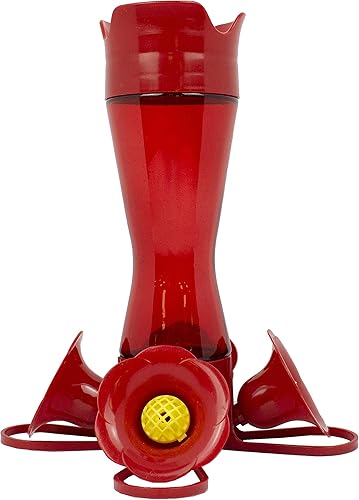
Best hummingbird feeders: bottle, saucer and window picks for ruby-throats

A hummingbird feeder is the highest-traffic backyard bird feeder in summer. Here is what makes it easy to clean and attractive to birds.

By Pickspry EditorialUpdated 4 picks


The short answer

The Aspects 367 HummZinger Ultra 12 oz is the best hummingbird feeder for most yards. The saucer design does not drip, the built-in ant moat blocks ants without a separate accessory, and the snap-apart base makes it easier to clean than any bottle feeder.

Product buttons open Amazon search results. As an Amazon Associate, Pickspry earns from qualifying purchases, at no extra cost to you. Learn more

Quick picks

How we chose

We filtered for hummingbird feeders sold on Amazon US that have separately documented ant moat features, removable parts for cleaning, and no reports of consistent leaking. Specs from manufacturer pages (Aspects, First Nature, Perky-Pet). We did not test these products ourselves.

The picks, in detail

4 picks reviewed
01
Best saucer feeder
Aspects Aspects 367 HummZinger Ultra Hummingbird Feeder

Aspects 367 HummZinger Ultra Hummingbird Feeder

Brand: Aspects

Best for

Any yard with regular hummingbird traffic where cleaning convenience and ant resistance are priorities.

Skip if

You want a large-capacity feeder. The HummZinger Ultra holds 12 oz. For multiple hummingbirds at a busy station, consider a 16 oz or larger bottle feeder.

Saucer feeders do not drip because the nectar is not under gravity pressure from an inverted bottle. Bottle feeders rely on a vacuum seal to prevent dripping: when the seal fails from sun, aging or a bump, the feeder drips and empties in hours.

The HummZinger's snap-apart cleaning is the key maintenance feature. The top and bottom snap apart for full access to the nectar basin. No brushes, no narrow ports to scrub through: the entire feeding surface is accessible to a sponge or cloth. For a feeder that needs cleaning every 2 to 3 days in summer heat, this matters.

What buyers say

Any yard with regular hummingbird traffic say Aspects 367 HummZinger Ultra Hummingbird Feeder does what it describes without needing adjustments out of the box. Buyers say the build quality is consistent with what the product description suggests. Buyers who find themselves in a position where you want a large-capacity feeder say a different option makes more sense for their situation.

Specifications

Specifications for Aspects 367 HummZinger Ultra Hummingbird Feeder
Capacity12 oz
Ports4
Ant moatBuilt-in
DesignSaucer (no inverted bottle)
MaterialPolycarbonate

Specs from Aspects, HummZinger Ultra product page

02
Best high-capacity feeder
First Nature First Nature 3055 32 oz Hummingbird Feeder

First Nature 3055 32 oz Hummingbird Feeder

Brand: First Nature

Best for

Yards with multiple hummingbirds where a small feeder empties daily and you want to refill less frequently.

Skip if

You live in a warm climate where nectar ferments within 2 days. A large-capacity feeder that holds 32 oz will often have nectar go bad before it is consumed. Match capacity to your hummingbird traffic.

Ten feeding ports allow multiple hummingbirds to feed simultaneously without constant territorial competition. Ruby-throated hummingbirds are territorial and one dominant bird often chases others from feeders. Multiple feeders positioned out of sight of each other, or a single large feeder with many ports, reduces the efficiency of single-bird territory guarding.

The wide-mouth bottle is easy to fill and clean. First Nature specifies the base components as dishwasher safe (top rack).

What buyers say

Most buyers fitting the profile of yards with multiple hummingbirds report First Nature 3055 32 oz Hummingbird Feeder meets their expectations across regular use. Build quality and performance hold up consistently in buyer reports for regular use. The common reason buyers pass on it is when you live in a warm climate where nectar ferments within 2 days.

Specifications

Specifications for First Nature 3055 32 oz Hummingbird Feeder
Capacity32 oz
Ports10
Ant moatNot included (use a separate ant moat hanger)
MaterialRed polypropylene base, clear bottle

Specs from First Nature, 32 oz Hummingbird Feeder product page

03
Best glass feeder
Perky-Pet Perky-Pet 209B Pinch-Waist Hummingbird Feeder

Perky-Pet 209B Pinch-Waist Hummingbird Feeder

Brand: Perky-Pet

Best for

Birders who prefer a glass bottle feeder that does not discolor or absorb odors over time the way plastic feeders can.

Skip if

You are in a cold climate where freeze-thaw cycles are frequent. Glass can crack if the nectar freezes in the feeder. Bring glass feeders inside before temperatures drop below 30 degrees F.

Glass does not absorb nectar residue the way plastic does over time. In a plastic feeder used for 2 to 3 seasons, the interior walls may develop a sticky film that standard cleaning does not fully remove. Glass cleans to original clarity with a bottle brush.

The pinch-waist design is a classic visual style. The narrow waist makes it comfortable to grip while filling and cleaning. At 8 oz it is a good match for light hummingbird traffic.

What buyers say

Buyers say Perky-Pet 209B Pinch-Waist Hummingbird Feeder delivers on its stated purpose without hidden trade-offs in the first several uses. The group most consistently satisfied is birders who prefer a glass bottle feeder that does not discolor or absorb odors, who say it handles their specific use case reliably. Where buyers recommend looking elsewhere is when you are in a cold climate where freeze-thaw cycles are frequent.

Specifications

Specifications for Perky-Pet 209B Pinch-Waist Hummingbird Feeder
Capacity8 oz
Ports3
MaterialGlass bottle, plastic base
CleaningStandard bottle brush required for the glass portion

Specs from Perky-Pet, 209B Pinch Waist Feeder product page

04
Best window hummingbird feeder
Aspects Aspects 407 Window HummZinger

Aspects 407 Window HummZinger

Brand: Aspects

Best for

Close-up window viewing of hummingbirds, using the same HummZinger saucer design in a suction-cup window mount.

Skip if

You have a textured, frosted or curved window. Suction cups require smooth flat glass.

The window version of the HummZinger brings hummingbirds within inches of your face through the glass. Hummingbirds adapt to window feeders quickly. A window feeder positioned at eye level near a shaded window is one of the best ways to observe hummingbird feeding behavior.

The saucer design means no dripping on the window glass. The suction cups are the same quality as the HummZinger's reputation; reapply them with clean glass and wet cups for the best adhesion.

What buyers say

Buyers point out that when you have a textured, frosted or curved window, a different product is the stronger fit. Outside that situation, Aspects 407 Window HummZinger gets straightforward positive feedback from people using it as intended. For close-up window viewing of hummingbirds, the performance buyers report is consistently positive across the product's intended use.

Specifications

Specifications for Aspects 407 Window HummZinger
Capacity8 oz
MountingSuction cup window mount
DesignSaucer (same as HummZinger Ultra)

Specs from Aspects, Window HummZinger product page

Why the feeder design matters more than the brand

The key performance differences between hummingbird feeders are:

Cleaning ease. Nectar ferments in 2 to 3 days in summer heat. A feeder that takes 15 minutes to clean with brushes will be cleaned less frequently than one that snaps apart and rinses clean in 2 minutes. The best feeder is the one you actually clean on schedule.

Leak prevention. Bottle feeders use an inverted container and rely on a vacuum seal to prevent the nectar from draining. When the seal fails, the feeder empties into a sticky puddle below and attracts ants, bees and wasps. Saucer feeders are gravity-fed and do not rely on vacuum seals; they do not drip.

Ant resistance. Ants find hummingbird feeders and invade the ports, drowning in the nectar and contaminating the supply. An ant moat (a small water-filled cup above the hanging hook) physically blocks ants from reaching the feeder. Some feeders include this; others require a separate ant moat accessory.

Placement for maximum visits

Hummingbirds follow flower routes: they visit the same spots in sequence. A feeder placed where hummingbirds already travel gets discovered within 1 to 3 days. A feeder in an isolated spot with no nearby flower traffic can go weeks before a bird finds it.

Place the feeder:

  • Near red tubular flowers (salvia, cardinal flower, trumpet vine) if possible
  • In partial shade to reduce nectar fermentation speed
  • At least 10 feet from feeders where aggressive species like house sparrows congregate
  • Out of sight of other hummingbird feeders to reduce territorial guarding

Multiple feeders reduce territorial fighting

Ruby-throated hummingbirds are aggressive. One dominant bird typically guards a feeder and chases others away. Setting up two feeders out of sight of each other forces the dominant bird to make a choice: it cannot guard both simultaneously. Bird traffic at both feeders increases when the dominant bird cannot see the second feeder from the first.

Compare the picks

Side by side comparison of every pick
Specification
Aspects Aspects 367 HummZinger Ultra Hummingbird Feeder
Aspects 367 HummZinger Ultra Hummingbird Feeder
First Nature First Nature 3055 32 oz Hummingbird Feeder
First Nature 3055 32 oz Hummingbird Feeder
Perky-Pet Perky-Pet 209B Pinch-Waist Hummingbird Feeder
Perky-Pet 209B Pinch-Waist Hummingbird Feeder
Aspects Aspects 407 Window HummZinger
Aspects 407 Window HummZinger
Our verdictBest saucer feederBest high-capacity feederBest glass feederBest window hummingbird feeder
Capacity12 oz32 oz8 oz8 oz
Ports4103Not listed
Ant moatBuilt-inNot included (use a separate ant moat hanger)Not listedNot listed
DesignSaucer (no inverted bottle)Not listedNot listedSaucer (same as HummZinger Ultra)
MaterialPolycarbonateRed polypropylene base, clear bottleGlass bottle, plastic baseNot listed
CleaningNot listedNot listedStandard bottle brush required for the glass portionNot listed
MountingNot listedNot listedNot listedSuction cup window mount
BuyCheck priceCheck priceCheck priceCheck price

Questions people ask

How often should I clean a hummingbird feeder?

Every 2 days in hot weather (above 80 degrees F). Every 4 to 5 days in cooler weather. Never skip cleaning and just top off with fresh nectar: adding fresh nectar to a feeder with old nectar speeds fermentation of the entire batch. The Hummingbird Society recommends erring toward more frequent cleaning rather than less.

Why won't hummingbirds come to my feeder?

Common reasons: the feeder was placed in a spot hummingbirds do not travel through. The nectar was left too long and fermented. The feeder is in full afternoon sun that heats the nectar. No red coloring on the feeder to signal hummingbirds. Hummingbirds are not in your area yet (they migrate: ruby-throats arrive in the eastern US from April to May). Try moving the feeder within sight of flowers hummingbirds already visit.

Should I take down my hummingbird feeder in fall?

Leaving a feeder up in fall does not discourage migration. Hummingbirds migrate in response to day length and instinct, not food availability. Keeping feeders up through late September and October can support late migrants and occasional year-round hummingbirds in the southern US. Take the feeder down only after you have not seen a hummingbird for 2 weeks.

Do I need to add red dye to hummingbird nectar?

No. The Hummingbird Society advises against red dye in nectar. A red feeder is sufficient to attract hummingbirds. Dye adds no benefit and may be harmful. Use plain 1:4 sugar-to-water ratio nectar without additives.