Best Japanese whetstones: water stones for kitchen and single-bevel knife work

Japanese whetstones cut faster and leave finer edges than most Western stones. Here is what the grit numbers mean and which stones are worth buying.

By Pickspry EditorialUpdated 4 picks


The short answer

The King KW-65 1000/6000 combination stone is the best entry-level Japanese whetstone. The 1000 grit side removes metal quickly enough for reprofiling dull kitchen knives, and the 6000 grit side polishes the edge to a working sharpness appropriate for most kitchen tasks. It uses aluminum oxide abrasive, soaks in 5 minutes and does not require lapping as frequently as softer stones.

Product buttons open Amazon search results. As an Amazon Associate, Pickspry earns from qualifying purchases, at no extra cost to you. Learn more

Quick picks

How we chose

Japanese water stones (wetsstones) use aluminum oxide or silicon carbide abrasives bonded in a material that releases used particles and exposes fresh cutting surfaces as you sharpen. This is different from oil stones, which trap used abrasive in oil and cut more slowly. Specs from manufacturer pages and Korin Japanese Trading's stone guide. We did not test these products ourselves.

The picks, in detail

4 picks reviewed
01
Best beginner Japanese whetstone
King King KW-65 1000/6000 Combination Stone

King KW-65 1000/6000 Combination Stone

Brand: King

Best for

Home cooks and beginner knife sharpeners who want a single stone that handles dull knives and finishing in one purchase.

Skip if

You want to sharpen single-bevel Japanese knives (yanagiba, deba, usuba). Single-bevel work benefits from dedicated grit progression stones rather than a combination stone.

The 1000 grit side of the King KW-65 cuts fast enough to raise a burr on a kitchen knife in 5 to 10 strokes per side, which is the sign that metal is being removed from the edge. The 6000 grit side refines that rough edge to a working sharpness in another 10 strokes per side.

King stones use an aluminum oxide abrasive bonded in a clay-like material. The bond is medium-hard, which means it holds the abrasive well enough for consistent cutting without wearing too fast. Softer stones cut faster but require more frequent flattening to maintain a flat surface.

What buyers say

Home cooks and beginner knife sharpeners who want a single stone that handles say King KW-65 1000/6000 Combination Stone does what it describes without needing adjustments out of the box. Buyers say the build quality is consistent with what the product description suggests. Buyers who find themselves in a position where you want to sharpen single-bevel Japanese knives (yanagiba, deba, usuba) say a different option makes more sense for their situation.

Specifications

Specifications for King KW-65 1000/6000 Combination Stone
Grits1000 (coarse) and 6000 (fine)
AbrasiveAluminum oxide
Soak time5 minutes
Stone size7.25 x 2.5 x 1 inch
BondMedium (moderate cutting speed)

Specs from King, KW-65 Combination Whetstone product page

02
Best premium finishing stone
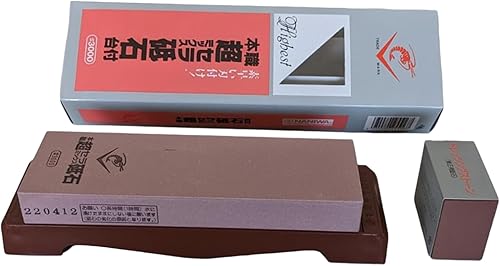
Naniwa Naniwa Chosera 3000 Grit Professional Stone

Naniwa Chosera 3000 Grit Professional Stone

Brand: Naniwa

Best for

Knife sharpeners who want a precision intermediate stone for polishing after a 1000 grit session, as a step before a 6000 or 8000 grit finisher.

Skip if

You only own one whetstone and need it to handle both coarse work and finishing. The Chosera 3000 is a single-purpose intermediate stone.

Naniwa's Chosera series uses a harder bond than King stones, which means the stone wears more slowly and maintains a flat surface longer between lapping sessions. Splash-and-go use (misting with water rather than soaking) is confirmed by Naniwa: the harder bond does not require pre-soaking to activate the abrasive.

The 3000 grit position in a three-stone progression (1000 → 3000 → 6000 or 8000) refines the coarse scratch pattern from the 1000 grit to a consistent mid-range polish that the finisher can bring to a high-luster edge efficiently.

What buyers say

Most buyers fitting the profile of knife sharpeners who want a precision intermediate stone for polishing after a 1000 grit session report Naniwa Chosera 3000 Grit Professional Stone meets their expectations across regular use. Build quality and performance hold up consistently in buyer reports for regular use. The common reason buyers pass on it is when you only own one whetstone and need it to handle both coarse work and finishing.

Specifications

Specifications for Naniwa Chosera 3000 Grit Professional Stone
Grit3000
AbrasiveAluminum oxide
BondHard (slow wear, maintains flatness well)
Soak timeSplash and go (does not require soaking)

Specs from Naniwa, Chosera Professional Whetstone product page

03
Best stone for single-bevel Japanese knives
Shapton Shapton Kuromaku 1000 Grit Ceramic Stone

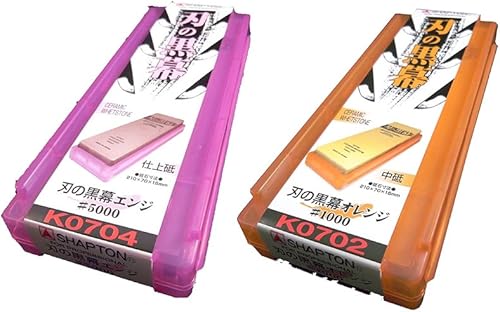
Shapton Kuromaku 1000 Grit Ceramic Stone

Brand: Shapton

Best for

Sharpening single-bevel Japanese knives including yanagiba, deba and usuba that require a very flat stone and controlled cutting speed.

Skip if

You primarily sharpen Western-style double-bevel kitchen knives. The Shapton Kuromaku's controlled cut speed is more of an advantage on Japanese single-bevel knives than on everyday kitchen knives.

Shapton Kuromaku stones use a ceramic abrasive in a very hard bond. The stone wears so slowly that it maintains flatness through extended use without frequent lapping, which matters for single-bevel sharpening where a perfectly flat stone is required to grind the flat face of the blade accurately.

The 1000 grit Shapton cuts slower than a King 1000 but produces a more consistent scratch pattern that transitions cleanly to finer stones. For a progression focused on single-bevel work, Shapton's controlled cutting behavior is the reason serious Japanese knife sharpeners often prefer it.

What buyers say

Buyers say Shapton Kuromaku 1000 Grit Ceramic Stone delivers on its stated purpose without hidden trade-offs in the first several uses. The group most consistently satisfied is sharpening single-bevel Japanese knives including yanagiba, who say it handles their specific use case reliably. Where buyers recommend looking elsewhere is when you primarily sharpen Western-style double-bevel kitchen knives.

Specifications

Specifications for Shapton Kuromaku 1000 Grit Ceramic Stone
Grit1000
AbrasiveCeramic (chromium oxide)
BondVery hard
Soak timeNo soaking required
Wear rateExtremely low

Specs from Shapton, Kuromaku Stone product page

04
Best lapping plate for stone maintenance
DMT DMT DiaFlat 95 Micron Lapping Plate

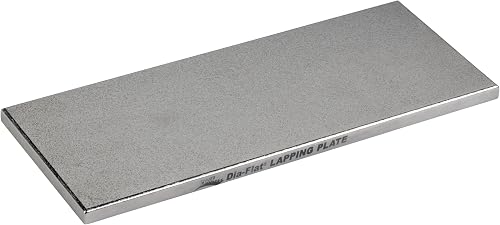
DMT DiaFlat 95 Micron Lapping Plate

Brand: DMT

Best for

Maintaining flat whetstones. Required for any serious sharpening setup.

Skip if

You are just starting out. One lapping session comes before you need a dedicated plate; use the side-by-side rubbing method (two stones rubbed together) for initial stone maintenance.

A concave whetstone cannot sharpen correctly: the hollow in the middle means the blade rocks rather than maintaining flat contact, and the edges of the hollow create uneven pressure. Every whetstone needs periodic flattening.

The DMT DiaFlat is a diamond-coated flat plate used by rubbing the concave stone against the plate with water. Diamond abrasive cuts the stone's material to restore a flat surface. For softer stones that hollow quickly, this is monthly maintenance; for harder stones, quarterly.

What buyers say

Buyers point out that when you are just starting out, a different product is the stronger fit. Outside that situation, DMT DiaFlat 95 Micron Lapping Plate gets straightforward positive feedback from people using it as intended. For maintaining flat whetstones. Required for any serious sharpening, the performance buyers report is consistently positive across the product's intended use.

Specifications

Specifications for DMT DiaFlat 95 Micron Lapping Plate
AbrasiveDiamond
Size8 x 3 inches
ApplicationFlattening and lapping whetstones

Specs from DMT, DiaFlat Lapping Plate product page

What makes Japanese water stones different

The fundamental difference between Japanese water stones and most Western sharpening stones is the bond structure. Japanese water stones use an abrasive (aluminum oxide, silicon carbide or ceramic) bonded in a relatively soft, porous matrix. As you sharpen, the matrix releases used abrasive particles and exposes fresh cutting surfaces. This is called a friable bond.

Oil stones use a harder bond that holds the abrasive in place and relies on oil to carry away the metal swarf. They cut more slowly at equivalent grit numbers and produce a slightly different scratch pattern.

For kitchen knives, water stones are the standard. They cut faster, require water (which is always available), and produce a higher-quality edge at high grit numbers.

Understanding Japanese grit numbers

Japanese whetstones use the JIS (Japanese Industrial Standard) grit scale. Higher numbers are finer:

Grit range Purpose
120 to 400 Heavy reprofiling, damaged edges
800 to 1200 Standard sharpening, establishing the edge
2000 to 3000 Intermediate polish
5000 to 8000 Fine finish, polishing
10000+ Mirror polish (single-bevel knives, razors)

A beginner needs 1000 grit and 6000 grit. Most kitchen knives do not need coarser than 1000 (unless chipped or severely dull) and do not benefit significantly from finer than 6000 for everyday use.

Stone maintenance: keeping the surface flat

Every whetstone becomes concave with use because the middle of the stone receives more wear than the edges. A concave stone cannot sharpen correctly. Flatten your stones regularly with a diamond lapping plate or by rubbing two stones together (for stones of similar hardness).

How often to flatten depends on the stone's bond hardness: soft stones (King) may need flattening every few sharpening sessions; hard stones (Shapton, Naniwa Chosera) may go months between flattening. Draw a pencil grid on the stone surface before lapping: when all lines are removed, the surface is flat.

Compare the picks

Side by side comparison of every pick
Specification
King King KW-65 1000/6000 Combination Stone
King KW-65 1000/6000 Combination Stone
Naniwa Naniwa Chosera 3000 Grit Professional Stone
Naniwa Chosera 3000 Grit Professional Stone
Shapton Shapton Kuromaku 1000 Grit Ceramic Stone
Shapton Kuromaku 1000 Grit Ceramic Stone
DMT DMT DiaFlat 95 Micron Lapping Plate
DMT DiaFlat 95 Micron Lapping Plate
Our verdictBest beginner Japanese whetstoneBest premium finishing stoneBest stone for single-bevel Japanese knivesBest lapping plate for stone maintenance
Grits1000 (coarse) and 6000 (fine)Not listedNot listedNot listed
AbrasiveAluminum oxideAluminum oxideCeramic (chromium oxide)Diamond
Soak time5 minutesSplash and go (does not require soaking)No soaking requiredNot listed
Stone size7.25 x 2.5 x 1 inchNot listedNot listedNot listed
BondMedium (moderate cutting speed)Hard (slow wear, maintains flatness well)Very hardNot listed
GritNot listed30001000Not listed
Wear rateNot listedNot listedExtremely lowNot listed
SizeNot listedNot listedNot listed8 x 3 inches
ApplicationNot listedNot listedNot listedFlattening and lapping whetstones
BuyCheck priceCheck priceCheck priceCheck price

Questions people ask

What is the difference between a Japanese water stone and a Western oil stone?

Japanese water stones use water as a lubricant and have an abrasive structure that releases used particles continuously, exposing fresh cutting surfaces as you sharpen. This makes them cut faster and produce a finer edge at equivalent grit numbers than oil stones. Oil stones use oil to float the swarf and cut more slowly. Japanese water stones are the standard for kitchen knife sharpening.

Do I need to soak a Japanese whetstone?

It depends on the stone. Softer stones (King, Bester) need 5 to 10 minutes of soaking before use. Harder stones (Shapton, Naniwa Chosera) use splash-and-go: mist the surface with water and begin sharpening. Using a soak-required stone without soaking produces drag and produces heat that can cause hairline cracks in some softer stones.

How do I know when to move from coarse to fine grit?

Move to the finer stone when you have raised a consistent burr along the entire edge on one side and deburred from the other. The burr is a small fold of metal pushed to the opposite face: you feel it as a slight roughness when you lightly drag your thumb across (not along) the edge. If you cannot feel a burr across the full edge, you have not completed the coarse grit stage.

How do I flatten a Japanese whetstone?

Use a diamond lapping plate (DMT DiaFlat or similar) rubbed against the stone surface with water. Work in circular or figure-eight patterns to remove the hollow area. A pencil grid drawn across the stone face shows progress: as the lapping plate wears the stone, the pencil marks disappear from the high spots first. When all pencil marks are gone, the stone is flat.