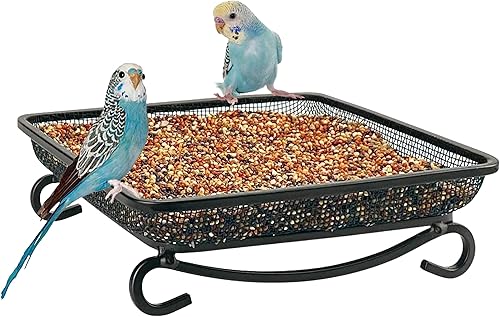
Best platform bird feeders: open tray designs for cardinals, jays and doves

A platform feeder is the one format that most backyard bird species will use. Here are four that handle weather and squirrels without adding complexity.

By Pickspry EditorialUpdated 4 picks


The short answer

The Woodlink Going Green Large Platform Feeder is the best open tray for most yards. It is made from recycled poly lumber that does not rot, the slatted bottom drains rain, and the open design accommodates cardinals, jays, mourning doves and sparrows at the same time.

Product buttons open Amazon search results. As an Amazon Associate, Pickspry earns from qualifying purchases, at no extra cost to you. Learn more

Quick picks

How we chose

Platform feeders are the most universal format in backyard birding. The open, flat surface with no perch requirement suits every bird that does not exclusively cling. We filtered for feeders sold on Amazon US with drainage, weather-resistant materials and enough surface area for medium to large birds. Specs confirmed on manufacturer or retailer product pages. We did not test these feeders ourselves.

The picks, in detail

4 picks reviewed
02
Best hanging platform
Stokes Select Stokes Select Open-Top Platform Feeder

Stokes Select Open-Top Platform Feeder

Brand: Stokes Select

Best for

Hanging from a shepherd's hook or branch where a post-mounted platform is not practical.

Skip if

You want ground or low-post placement. Hanging platforms swing in wind, which some birds find less comfortable than a stable surface.

A mesh bottom drains faster than slats and allows more airflow under the seed, which helps it stay dry longer. The hanging chain adds 6 to 8 inches of height to wherever you attach it, which is convenient for setups where the hook is already at 4 to 5 feet.

The trade-off is stability. A hanging platform moves in wind. Mourning doves in particular prefer stable surfaces and are more likely to use a post-mounted tray than a swinging one.

What buyers say

Most buyers fitting the profile of hanging from a shepherd's hook or branch report Stokes Select Open-Top Platform Feeder meets their expectations across regular use. Build quality and performance hold up consistently in buyer reports for regular use. The common reason buyers pass on it is when you want ground or low-post placement.

Specifications

Specifications for Stokes Select Open-Top Platform Feeder
MaterialRecycled plastic and metal mesh
DrainageMesh bottom
MountingHanging only

Specs from Stokes Select, Platform Feeder product listing

03
Best cedar platform
Perky-Pet Perky-Pet Cedar Platform Bird Feeder

Perky-Pet Cedar Platform Bird Feeder

Brand: Perky-Pet

Best for

Yards where aesthetics matter and you prefer a natural wood look over recycled poly or metal.

Skip if

You live in a wet climate. Cedar handles moisture well but will still need replacing every 3 to 5 years in consistently damp conditions.

Cedar is naturally resistant to moisture and insects, which is why it is the most common wood for outdoor bird feeders. A platform with no roof and a vented bottom allows air circulation that keeps seed reasonably dry between rains.

The natural grain and color of cedar looks better in a garden setting than plastic alternatives. The maintenance trade-off is that cedar platforms need inspection each season and may need replacing every 3 to 5 years.

What buyers say

Buyers say Perky-Pet Cedar Platform Bird Feeder delivers on its stated purpose without hidden trade-offs in the first several uses. The group most consistently satisfied is yards, who say it handles their specific use case reliably. Where buyers recommend looking elsewhere is when you live in a wet climate.

Specifications

Specifications for Perky-Pet Cedar Platform Bird Feeder
MaterialCedar
DrainageDrilled or screen bottom
MountingHang or post mount

Specs from Perky-Pet, Cedar Feeder product range

04
Best squirrel-resistant platform
Brome Bird Care Brome Squirrel Buster Plus with Cardinal Ring

Brome Squirrel Buster Plus with Cardinal Ring

Brand: Brome Bird Care

Best for

Squirrel-heavy yards where you want the benefits of an open feeder for large birds but with weight-sensitive squirrel exclusion.

Skip if

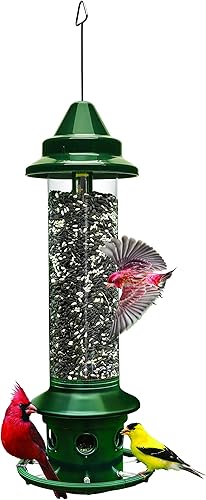
You want a true open tray. The Squirrel Buster Plus is a tube design with weight-sensitive ports, not a flat platform.

The Brome Squirrel Buster Plus is not a platform feeder in the traditional sense, but with the optional Cardinal Ring accessory it functions as one for larger perching birds. Cardinals, blue jays and similar species can land on the ring and feed from the ports, while squirrels trigger the weight-sensitive mechanism and find the ports closed.

The trade-off is that mourning doves and other ground-feeders still do not feed well from a tube-and-ring setup. For mixed species including doves, a separate tray is the better choice.

What buyers say

Buyers point out that when you want a true open tray, a different product is the stronger fit. Outside that situation, Brome Squirrel Buster Plus with Cardinal Ring gets straightforward positive feedback from people using it as intended. For squirrel-heavy yards, the performance buyers report is consistently positive across the product's intended use.

Specifications

Specifications for Brome Squirrel Buster Plus with Cardinal Ring
Capacity3.4 lbs mixed seed
MechanismWeight-sensitive cage closes under squirrel weight
AccessoryCardinal ring adds perch surface for larger birds
MountingHang

Specs from Brome Bird Care, Squirrel Buster Plus product page

Why a platform feeder attracts more species

Most backyard feeders are designed around small perching birds. Tube feeders require clinging or sitting on a thin perch ring. Hopper feeders have a narrow ledge. These designs work well for chickadees, titmice, nuthatches and finches.

They work less well for larger birds. Cardinals, blue jays and mourning doves are heavy enough that narrow perches feel unstable. They land on the feeder, feel unsteady and leave. A flat, open platform removes that barrier.

Cornell Lab of Ornithology data from Project FeederWatch consistently shows that northern cardinals are among the most-watched backyard birds in North America. A platform feeder is one of the primary reasons they visit a yard.

What seed to use

Black oil sunflower seeds attract the widest range of species in a platform feeder. Cardinals eat them readily. Jays prefer them. Woodpeckers will eat them from an open surface. The shell-free version (sunflower chips) is slightly more attractive to smaller birds and produces no shell waste under the feeder.

For mourning doves and ground-feeding sparrows, white proso millet added to the mix increases visits significantly. Project FeederWatch notes that millet is one of the top three seeds most frequently offered, because it attracts a large and diverse group of species.

Platform size and bird behavior

A platform smaller than 10 by 10 inches creates competition. Dominant birds chase others off, and you end up with one species monopolizing the feeder. A platform of 12 by 12 inches or larger gives multiple birds enough space to feed at once.

Cardinals in particular will not feed near another cardinal if they feel crowded. A wider platform or multiple smaller platforms spaced 10 to 15 feet apart is the most effective way to attract several cardinals at the same time.

Drainage is the critical design feature

Seed that sits in pooled water molds within a day or two in warm weather. Mold produces aflatoxins that can kill birds. Platform feeders without drainage should be avoided, or the seed must be removed after every rain.

A slatted bottom or mesh bottom drains the platform naturally. During extended rainy periods, check that the slats or mesh are not clogged with compacted seed or debris.

Compare the picks

Side by side comparison of every pick
Specification
Woodlink Woodlink Going Green Large Platform Feeder
Woodlink Going Green Large Platform Feeder
Stokes Select Stokes Select Open-Top Platform Feeder
Stokes Select Open-Top Platform Feeder
Perky-Pet Perky-Pet Cedar Platform Bird Feeder
Perky-Pet Cedar Platform Bird Feeder
Brome Bird Care Brome Squirrel Buster Plus with Cardinal Ring
Brome Squirrel Buster Plus with Cardinal Ring
Our verdictBest overallBest hanging platformBest cedar platformBest squirrel-resistant platform
MaterialRecycled poly lumberRecycled plastic and metal meshCedarNot listed
DrainageSlatted bottomMesh bottomDrilled or screen bottomNot listed
MountingPost mount, hang, or ground placementHanging onlyHang or post mountHang
Size12 x 12 inches approximatelyNot listedNot listedNot listed
CapacityNot listedNot listedNot listed3.4 lbs mixed seed
MechanismNot listedNot listedNot listedWeight-sensitive cage closes under squirrel weight
AccessoryNot listedNot listedNot listedCardinal ring adds perch surface for larger birds
BuyCheck priceCheck priceCheck priceCheck price

Questions people ask

What birds use a platform feeder?

Northern cardinals, blue jays, mourning doves, white-throated sparrows, white-crowned sparrows, dark-eyed juncos, American robins and many other species prefer open platform feeders over tube or hopper designs. Cardinals in particular are known to avoid cramped perches on tube feeders.

What seed should I put in a platform feeder?

A mix of sunflower seeds, millet and peanuts covers the widest range of species. Cardinals prefer sunflower. Doves prefer millet. Jays eat both plus whole peanuts. For a single seed, black oil sunflower attracts the most species per pound according to Project FeederWatch data.

How do I keep squirrels off a platform feeder?

A pole baffle on the mounting pole is the most reliable method if the feeder is at least 10 feet from any tree or structure. There is no effective squirrel deterrent for a platform feeder hung from a tree branch.

How often should I clean a platform feeder?

Brush out old seed and droppings weekly. Wet seed accumulates bacteria and mold that can harm birds. A full rinse with diluted bleach solution (1 part bleach to 9 parts water) once a month and thorough drying before refilling keeps the feeder safe.