Best ski helmet for safety and warmth: Amazon picks

Ski helmet certification (ASTM F2040 or EN 1077), whether it has a MIPS liner, in-mold versus hard shell construction, ventilation control, goggle clip compatibility and adjustable fit system determine which ski helmet provides certified protection on the mountain.

By Pickspry EditorialUpdated 4 picks


The short answer

Giro Range MIPS Ski Helmet at $180 is the best ski helmet for most skiers: MIPS (Multi-directional Impact Protection System) reduces rotational force transmission to the brain in angled impacts, the in-mold polycarbonate construction is lighter than hard shell, and the dial-fit adjustment system fits head circumferences from 52 to 59 cm without tool adjustment.

Product buttons open Amazon search results. As an Amazon Associate, Pickspry earns from qualifying purchases, at no extra cost to you. Learn more

Quick picks

How we chose

Ski helmets are evaluated by safety certification (ASTM F2040, EN 1077), presence of MIPS liner, construction method (in-mold versus hard shell), weight, ventilation control, goggle integration and price. Specs from manufacturer product pages. We did not test these products.

The picks, in detail

4 picks reviewed
01
Best ski helmet for most skiers
Giro Giro Range MIPS Ski Helmet

Giro Range MIPS Ski Helmet

Brand: Giro

Best for

Intermediate to advanced skiers who want MIPS rotational impact protection in an in-mold lightweight construction with adjustable ventilation for regulating temperature across varying activity levels, where Giro Range MIPS uses 13 adjustable vents that can be opened or closed with a gloved hand to control airflow during hard skiing versus lift rides.

Skip if

Budget under $100 is the requirement. Giro Range MIPS at $180 is above the budget helmet range. For skiers who ski fewer than 10 days per season in standard resort conditions and prioritize cost over MIPS protection, the Atomic Revent at $80 provides ASTM-certified safety at significantly lower cost.

Giro Range MIPS uses in-mold construction that fuses the polycarbonate outer shell to the EPS foam liner during manufacturing, creating a lighter, more integrated helmet than separate hard shell and foam construction. The MIPS liner floats approximately 10 to 15mm inside the helmet shell, allowing the helmet to move slightly on the head in an angled impact rather than transmitting the full rotational force to the skull and brain. The dial-fit adjustment at the rear of the helmet tightens and releases the fit ring with one hand.

Giro is a California helmet brand established in 1985, producing cycling and snow sports helmets. They were among the first brands to integrate MIPS in ski helmets at a mainstream price point.

At $180, Giro Range MIPS is the best value MIPS ski helmet in this guide.

Specifications

Specifications for Giro Range MIPS Ski Helmet
SafetyASTM F2040, EN 1077B
MIPSYes
ConstructionIn-mold polycarbonate
Vents13 adjustable
Price$180

Specs from Giro Range MIPS ski helmet in-mold ASTM certified ventilation, dial fit adult Amazon search
02
Best budget ski helmet
Atomic Atomic Revent Ski Helmet

Atomic Revent Ski Helmet

Brand: Atomic

Best for

Beginner and occasional skiers who want a certified ski helmet at the lowest reasonable cost, where Atomic Revent uses hard shell construction with EPS liner that meets ASTM F2040 certification for impact protection in resort skiing conditions.

Skip if

MIPS protection is important to the buyer. Atomic Revent at $80 does not include a MIPS liner. MIPS adds approximately $50 to $80 to the production cost of a helmet and is not available in this budget range. For buyers who specifically want MIPS after reviewing the safety research, the Giro Range MIPS is the lowest-cost MIPS option in this guide.

Atomic Revent uses a traditional hard shell polycarbonate outer with an EPS liner meeting ASTM F2040 standard for alpine ski helmet protection. The dial-fit adjustment at the back of the helmet adjusts the inner ring for head circumference fit without tools. The fixed ventilation provides basic airflow without adjustable vent control.

Atomic is an Austrian ski equipment brand founded in 1955, producing skis, boots and helmets. Atomic helmets are sold in ski shops globally alongside their boot and binding products.

At $80, Atomic Revent is the most affordable certified option in this guide.

Specifications

Specifications for Atomic Revent Ski Helmet
SafetyASTM F2040
MIPSNo
ConstructionHard shell
FitDial adjustment
Price$80

Specs from Atomic Revent ski helmet ASTM certified hard shell adult, budget beginner Amazon search

03
Best mid-range ski helmet with MIPS
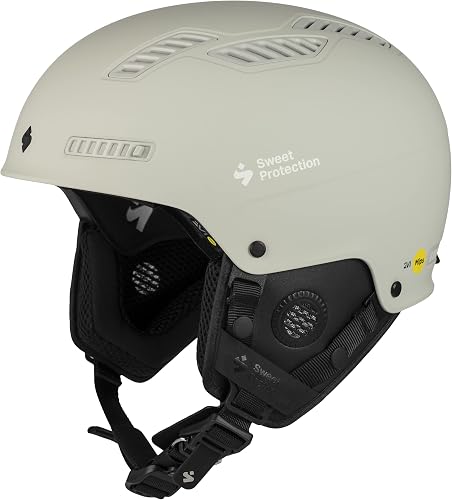
Sweet Protection Sweet Protection Igniter 2Vi MIPS

Sweet Protection Igniter 2Vi MIPS

Brand: Sweet Protection

Best for

Skiers who want MIPS protection in a lightweight in-mold design at a price between the budget Atomic and the premium Giro and Smith options, where Sweet Protection Igniter 2Vi MIPS uses an in-mold construction with MIPS liner and goggle clip integrated into the back of the helmet for compatible Sweet Protection and third-party goggles.

Skip if

Adjustable ventilation is important. Sweet Protection Igniter 2Vi uses a fixed ventilation system without adjustable vent ports. For skiers who do hard aerobic skiing in warmer temperatures and want to control ventilation by opening and closing vents, the Giro Range MIPS with 13 adjustable vents provides that control.

Sweet Protection Igniter 2Vi MIPS uses in-mold construction with MIPS at the $100 price point, which is the most affordable MIPS in-mold ski helmet in this guide. The 2Vi (second version) update improved the foam liner density and added the goggle clip at the rear to hold goggle straps when the helmet is stored.

Sweet Protection is a Norwegian outdoor gear brand founded in 1998, specializing in technical helmets for skiing, cycling and water sports. Their helmets use standard safety certifications for international distribution.

At $100, Sweet Protection Igniter 2Vi is the entry point for MIPS in-mold in this guide.

Specifications

Specifications for Sweet Protection Igniter 2Vi MIPS
SafetyASTM F2040, EN 1077B
MIPSYes
ConstructionIn-mold
VentilationFixed (not adjustable)
Price$100

Specs from Sweet Protection Igniter 2Vi MIPS ski helmet in-mold lightweight, goggle compat Amazon search

04
Best premium ski helmet
Smith Smith Vantage MIPS Ski Helmet

Smith Vantage MIPS Ski Helmet

Brand: Smith

Best for

Advanced skiers who want the lightest, most ventilated MIPS ski helmet available in this guide, where Smith Vantage MIPS uses Koroyd (a welded thermoplastic core) instead of traditional EPS foam, providing a lighter and more breathable helmet construction while meeting the same ASTM F2040 certification.

Skip if

Budget is a concern. Smith Vantage MIPS at $220 is the most expensive option in this guide by a significant margin. The Koroyd construction and enhanced goggle integration with Smith goggles are engineering improvements, but the safety certifications are identical to the Giro Range MIPS at $180 and the Sweet Protection at $100. The premium is appropriate for serious skiers who value weight reduction and ventilation over cost.

Smith Vantage MIPS uses Koroyd, a welded co-polymer tube structure that replaces traditional EPS foam in the liner. Koroyd is significantly lighter per unit volume than EPS and allows more ventilation channels through the liner material without reducing certified impact performance. The Smith goggle integration system at the rear clips to Smith goggles specifically for a fully sealed forehead-to-goggle interface.

Smith Optics, established in 1965 in Sun Valley Idaho, produces goggles and helmets as integrated systems designed to work together in the same goggle-plus-helmet market.

At $220, Smith Vantage MIPS is the premium lightweight ski helmet in this guide.

Specifications

Specifications for Smith Vantage MIPS Ski Helmet
SafetyASTM F2040, EN 1077B
MIPSYes
ConstructionKoroyd core
Goggle integrationSmith goggle clip system
Price$220

Specs from Smith Vantage MIPS ski helmet Koroyd construction ventilation premium, lightweight Amazon search

Ski helmet comparison

Product MIPS Construction Key Feature Price
Atomic Revent No Hard shell Budget certified $80
Sweet Protection Igniter 2Vi Yes In-mold Entry MIPS $100
Giro Range MIPS Yes In-mold 13 adjustable vents $180
Smith Vantage MIPS Yes Koroyd Lightest/most vented $220

Compare the picks

Side by side comparison of every pick
Specification
Giro Giro Range MIPS Ski Helmet
Giro Range MIPS Ski Helmet
Atomic Atomic Revent Ski Helmet
Atomic Revent Ski Helmet
Sweet Protection Sweet Protection Igniter 2Vi MIPS
Sweet Protection Igniter 2Vi MIPS
Smith Smith Vantage MIPS Ski Helmet
Smith Vantage MIPS Ski Helmet
Our verdictBest ski helmet for most skiersBest budget ski helmetBest mid-range ski helmet with MIPSBest premium ski helmet
SafetyASTM F2040, EN 1077BASTM F2040ASTM F2040, EN 1077BASTM F2040, EN 1077B
MIPSYesNoYesYes
ConstructionIn-mold polycarbonateHard shellIn-moldKoroyd core
Vents13 adjustableNot listedNot listedNot listed
Price$180$80$100$220
FitNot listedDial adjustmentNot listedNot listed
VentilationNot listedNot listedFixed (not adjustable)Not listed
Goggle integrationNot listedNot listedNot listedSmith goggle clip system
BuyCheck priceCheck priceCheck priceCheck price

Questions people ask

What is MIPS and do I need it in a ski helmet?

MIPS (Multi-directional Impact Protection System) is a technology developed by Swedish researchers at the Royal Institute of Technology in Stockholm, first commercialized in 2007. The MIPS liner is a thin plastic sheet that sits between the outer foam liner and the comfort padding, connected by low-friction anchors. In an angled impact (which describes most real-world ski falls rather than purely vertical impacts), the MIPS liner allows the helmet to slide 10 to 15mm relative to the head, reducing the rotational force transmitted to the brain. Laboratory tests by Virginia Tech's Helmet Lab found that helmets with MIPS consistently outperformed equivalent non-MIPS helmets in rotational impact tests. Whether individual skiers need MIPS depends on their risk assessment: MIPS adds $50 to $80 to a helmet's cost, lasts the same lifespan as non-MIPS helmets and provides measurable additional protection in angled impacts at no meaningful weight penalty.

When should I replace a ski helmet?

Replace a ski helmet after any impact that might have compromised the foam liner, regardless of whether visible damage is present. EPS foam (used in almost all ski helmets) deforms permanently on impact to absorb force; this deformation is not always visible from outside the helmet but reduces protection in subsequent impacts. The general replacement guideline from the Snell Memorial Foundation and helmet manufacturers is 5 years from date of first use or 10 years from manufacture date, whichever comes first, even without any impact. The EPS foam degrades from UV exposure, temperature cycling and contact with skin oils over time, reducing its impact absorption performance. If the helmet was involved in a significant impact (a hard fall where the head contacted the ground or a tree), replace it immediately regardless of age.

How should a ski helmet fit?

A properly fitted ski helmet sits level on the head, approximately one to two finger-widths above the eyebrows, with the back of the helmet covering the occipital bone at the rear base of the skull. The helmet should not rock forward, backward or side-to-side when the head is moved or when pushed from the front. The retention system (dial at the back) should be tightened until the helmet feels snug but does not create pressure points on the forehead or sides. With the helmet on and fastened, try to push it forward from the back: it should not cover the eyes. Fit testing with goggles is important: the goggle foam should sit flush against the bottom of the helmet foam without a gap that allows cold air to hit the forehead.

  • Buying guide

    Best ski goggles for slopes and powder: Amazon picks

    Ski goggle lens tint (mirror versus photochromic), whether the lens has OTG over-the-glass design for glasses wearers, field of view width, foam seal layer count, ventilation to prevent fogging and helmet compatibility determine which ski goggles perform on the mountain.

    4 picks · 5 sourcesUpdated September 28, 2026

  • Buying guide

    Best ski gloves for cold and wet conditions: Amazon picks

    Ski glove insulation type (down versus synthetic), waterproof membrane (GORE-TEX versus proprietary), gauntlet versus under-the-cuff length, wrist strap cinch, touchscreen compatibility on the fingertips and warmth rating determine which ski gloves keep hands dry and warm on the mountain.

    4 picks · 5 sourcesUpdated September 28, 2026

  • Buying guide

    Best ski socks for warmth and blister prevention: Amazon picks

    Ski sock material (merino wool versus synthetic), cushioning zone placement at the shin and heel, height (over-the-calf versus mid-calf), whether the sock has reinforced shin padding for boot buckle pressure and moisture-wicking construction determine which ski socks prevent blisters and keep feet warm.

    4 picks · 5 sourcesUpdated September 28, 2026

  • Buying guide

    Best ski poles for alpine and all-mountain skiing: Amazon picks

    Ski pole material (aluminum versus carbon fiber), grip design (cork versus foam rubber), basket size (powder versus race basket), pole length sizing method, wrist strap design and whether the pole is adjustable or fixed-length determine which ski poles suit the skiing style.

    4 picks · 5 sourcesUpdated September 28, 2026