How to sharpen a single bevel knife on whetstones

Almost all the work happens on one face. The back gets a few light strokes, and the stones matter more than any angle guide.

By Pickspry EditorialUpdated 4 picks


The short answer

Do nearly all the sharpening on the beveled front face, with the whole bevel laid flat on the stone, and give the flat back only a few light strokes to lift the burr. Start on a 1000 grit stone, finish on 3000 to 5000, keep your stones flat, and never use a pull-through sharpener on a single bevel blade.

Product buttons open Amazon search results. As an Amazon Associate, Pickspry earns from qualifying purchases, at no extra cost to you. Learn more

Know the parts before you start

A single bevel knife, such as a yanagiba, deba or usuba, is sharpened on one side only. The terms matter, because each part is treated differently:

  • Bevel. The wide angled face on the front, running from the edge up to a ridge.
  • Shinogi line. The ridge where the bevel meets the flat of the blade.
  • Urasuki. A shallow hollow ground into the back of the blade.
  • Uraoshi. The thin flat rim around that hollow, running along the edge.

Most of your sharpening happens on the bevel. The back, meaning the uraoshi, gets very little, and the hollow behind it is never ground on a flat stone.

Single bevel knives are also made for one hand. If the bevel is on the right side as you hold it, it is a right handed knife.

Which stones you need

The SharpEdge guide recommends grits by knife type:

Knife Coarse Medium Fine
Deba 220 to 400 1000 to 3000 5000 to 10000
Usuba Not usually needed 1000 to 3000 5000 to 10000
Yanagiba Not usually needed 1000 to 3000 5000 to 10000

In practice that means two or three stones. A medium and a fine stone cover a yanagiba or usuba. A deba, which takes harder use, usually needs a coarse stone as well. Add something to keep the stones flat, because a dished stone cannot meet a wide flat bevel evenly.

Step by step

  1. Prepare. Wrap a wooden wa handle in masking tape or plastic wrap so slurry does not stain it. Flatten every stone before you start.
  2. Start with the back, briefly. On a 1000 to 1500 grit stone, lay the back flat, keep your fingers close to the edge and pull the blade toward you with light pressure. Stop as soon as the rolled edge no longer catches on the stone. That usually takes only a few strokes.
  3. Work the front bevel. Lay the bevel flat on the stone so that both the edge and the shinogi line touch. Work along the blade in sections, from heel to tip, keeping the bevel flat the whole time. The goal is to remove steel evenly across the bevel so the shinogi line moves up as the edge wears back.
  4. Check for a burr. Run a fingertip gently off the back of the edge, never along it. A slight rough lip along the whole length means you have sharpened all the way to the edge.
  5. Refine on the fine stone. Repeat the bevel work on your 3000 to 5000 grit stone with lighter pressure.
  6. Remove the burr. Finish with one or two flat strokes on the back, on the fine stone. Then check the edge again.

Mistakes that shorten a knife's life

  • Grinding the back too hard. Every extra stroke on the back thins the flat rim and eats toward the hollow. Once the hollow is gone, only a professional with a large wheel can restore it.
  • Using a pull-through sharpener. Its fixed slots cannot follow a one-sided edge, and undoing the damage takes a lot of stone work.
  • Sharpening on a dished stone. A hollow stone rounds the bevel instead of keeping it flat. Flatten your stones every session.

Stones for single bevel knives

4 picks reviewed
01
Best first stone
King King KW-65 1000/6000 Combination Whetstone

King KW-65 1000/6000 Combination Whetstone

Brand: King

Best for

A first setup for a yanagiba or usuba. One stone covers the 1000 grit sharpening and a 6000 grit finish.

Skip if

You want to sharpen the moment you sit down. It is a soaking stone and needs time in water first.

Two stones in one block, which makes it a sensible first purchase. The 1000 side does the real sharpening and the 6000 side refines the edge. For a yanagiba or usuba, that covers the medium and fine range that specialist retailers recommend. A deba that has chipped will also need a coarse stone.

It is a soaking stone, so it needs to sit in water before use and stay wet while you work. Like any water stone it has to be kept flat, which is why a flattening plate belongs in the same order.

What buyers say

A first setup for a yanagiba or usuba. One stone covers the 1000 grit say King KW-65 1000/6000 Combination Whetstone does what it describes without needing adjustments out of the box. Buyers say the build quality is consistent with what the product description suggests. Buyers who find themselves in a position where you want to sharpen the moment you sit down say a different option makes more sense for their situation.

Specifications

Specifications for King KW-65 1000/6000 Combination Whetstone
Grits1000 and 6000
Size185 x 63 x 25 mm (about 7.3 x 2.5 x 1 in)
TypeSoaking water stone
BaseNon-slip base included
Made inJapan

Specs from Osaka Tools, King KW-65 combination whetstone listing

02
Best medium stone with no soaking
Shapton Shapton Kuromaku #1000 (K0702)

Shapton Kuromaku #1000 (K0702)

Brand: Shapton

Best for

Sharpeners who want a medium stone that is ready with a splash of water and stays flat longer.

Skip if

You would rather buy one block that covers two grits. The King combination stone does that.

A hard ceramic 1000 grit stone that needs only a splash of water, not a soak. One detailed review of this stone describes it as staying flatter than a soft water stone. That matters on a single bevel knife, where a dished stone rounds off the wide flat bevel.

Pair it with a finishing stone in the 3000 to 5000 range.

What buyers say

Most buyers fitting the profile of sharpeners who want a medium stone that is ready with a splash of water and report Shapton Kuromaku #1000 (K0702) meets their expectations across regular use. Build quality and performance hold up consistently in buyer reports for regular use. The common reason buyers pass on it is when you would rather buy one block that covers two grits.

Specifications

Specifications for Shapton Kuromaku #1000 (K0702)
Grit1000
Size210 x 70 x 15 mm (8.3 x 2.8 x 0.6 in)
TypeCeramic, splash and go
Maker's item numberK0702

Specs from Amazon listing, Shapton K0702 #1000

03
Best finishing stone
Suehiro Suehiro Rika 5000

Suehiro Rika 5000

Brand: Suehiro

Best for

Refining the edge after the 1000 grit stone, and lightly lifting the burr from the flat back.

Skip if

Your knife is chipped or very dull. Start on a medium or coarse stone first.

Suehiro calls the Rika 5000 a finishing stone with smooth sharpening properties, made for professionals but suited to home cooks as well. At 5000 grit it sits in the fine range that single bevel guides recommend for finishing a yanagiba or usuba.

It comes with a nagura, a small dressing stone used to clean the surface and raise a slurry.

What buyers say

Buyers say Suehiro Rika 5000 delivers on its stated purpose without hidden trade-offs in the first several uses. The group most consistently satisfied is refining the edge after the 1000 grit stone, who say it handles their specific use case reliably. Where buyers recommend looking elsewhere is when your knife is chipped or very dull.

Specifications

Specifications for Suehiro Rika 5000
Grit5000
Size206 x 73 x 23 mm (8 x 2.9 x 0.9 in)
Weight900 g
IncludedNagura dressing stone and stand
Made inJapan

Specs from Osaka Tools, Suehiro Rika 5000 listing

04
Best for keeping stones flat
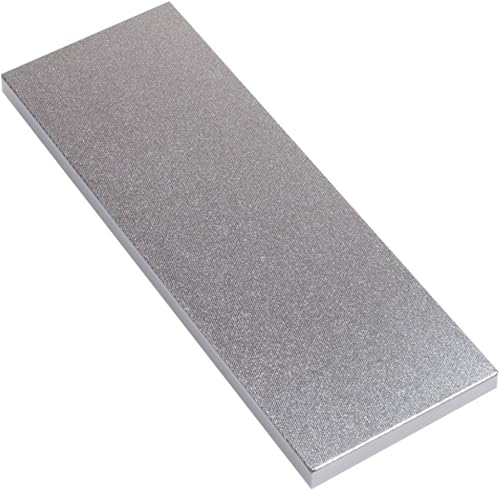
Atoma Atoma #400 Diamond Plate

Atoma #400 Diamond Plate

Brand: Atoma

Best for

Flattening your water stones, and doubling as a coarse stone for a chipped deba.

Skip if

You only own one hard ceramic stone and sharpen rarely. A plate earns its place once you have soft stones that wear.

A single bevel knife has a wide, flat bevel that has to meet the stone evenly. Once a stone dishes in the middle, it cannot do that. A diamond plate rubs the stone flat again in a few passes.

Specialist retailers suggest a 400 grit diamond plate for exactly this job, and note that it can also serve as the first, coarse stone when a blade has serious damage.

What buyers say

Buyers point out that when you only own one hard ceramic stone and sharpen rarely, a different product is the stronger fit. Outside that situation, Atoma #400 Diamond Plate gets straightforward positive feedback from people using it as intended. For flattening your water stones, the performance buyers report is consistently positive across the product's intended use.

Specifications

Specifications for Atoma #400 Diamond Plate
Grit400
Size8 x 2.77 x 0.32 in
AbrasiveDiamond

Specs from Amazon listing, Atoma Diamond Sharpener Medium #400

Questions people ask

Can you use a pull-through sharpener on a single bevel knife?

No. A pull-through grinds at a fixed preset angle and assumes a blade with two beveled sides. Japanese knife retailers warn that it removes too much steel, imposes the wrong angle and leaves an uneven bevel. On a single bevel knife, that kind of damage takes a lot of stone work to undo.

What angle do you sharpen a single bevel knife at?

You do not set an angle in the usual way. The front bevel is typically around 15 degrees, and you follow it by laying the whole bevel flat on the stone, with both the edge and the shinogi line touching. The back is sharpened flat.

How much should you sharpen the back of a single bevel knife?

Very little. A few light strokes on a flat stone to remove the burr is enough. Grinding the back too much wears away the flat rim and the hollow behind it, and restoring that hollow is a job for a professional sharpener with a large wheel.

Can a left handed cook use a single bevel knife?

Only a left handed version. The bevel is on one side for good, so a right handed yanagiba stays right handed. Left handed single bevel knives are made, but they are less common and usually cost more.